Ghana’s recent National Seed System Reset Convening at the West Africa Centre for Crop Improvement (WACCI) confirmed a simple truth: without strong seed systems, there can be no sustainable transformation of Ghana’s agriculture or food economy. Just as roads link producers to markets and energy powers industry, seed delivery systems connect agricultural science to farmers and ultimately determine our food security.
Yet fewer than 10 percent of Ghanaian farmers routinely use certified improved seed, despite decades of reforms, public investment and private sector participation. A new diagnostic presented to stakeholders highlighted weak early‑generation seed pipelines, under‑capitalised seed enterprises, low farmer confidence in seed quality, limited certification and enforcement capacity, and weak links between seed, markets and public procurement.
A national seed system reset at WACCI
On 16–17 March 2026, around 120 leaders from government, research institutions, the private sector, farmer organisations and development partners met at WACCI for a two‑day National Seed System Reset under the theme “Building Ghana’s Seed Delivery System – A National Policy and Execution Convening.” Hosted by WACCI and co‑convened by the 24H+ Secretariat, the Ministry of Food and Agriculture, the National Seed Trade Association of Ghana and other national institutions, with support from the UK‑funded Ghana JET programme and the Embassy of the Kingdom of the Netherlands, the meeting was designed as an execution platform rather than another general policy dialogue.
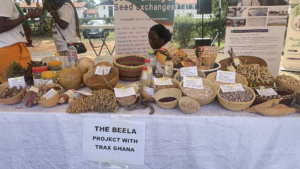
Day 1 combined an exhibition and campus immersion, including guided tours of WACCI’s breeding laboratories, early‑generation seed facilities and seed testing and certification labs, alongside the Horticulture Innovation Hub’s demonstrations of climate‑smart horticulture and agripreneurship. Day 2 focused on the hard truths of why Ghana’s seed system has not delivered at scale, what must change in the national architecture, and how to design crop‑specific delivery models for maize, rice, tomato, cassava and oil palm.

Seed systems at the heart of Feed Ghana and the 24‑Hour Economy
Speakers from the Presidency, the Ministry of Food and Agriculture, WACCI and development partners all stressed that seed is the infrastructure on which the Government’s Feed Ghana Programme and the 24‑Hour Economy’s GROW24 sub‑programme depend. Feed Ghana alone will require tens of thousands of tonnes of certified maize, rice, soybean and sorghum seed by 2028, as well as large volumes of quality planting material for cassava, yam and plantain, if Ghana is to reach full self‑sufficiency in rice and achieve ambitious production and jobs targets.
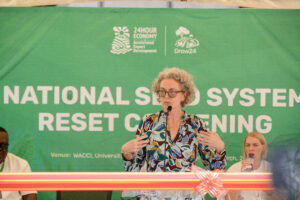
“I𝘧 𝘎𝘩𝘢𝘯𝘢 𝘪𝘴 𝘵𝘰 𝘥𝘰𝘶𝘣𝘭𝘦 𝘺𝘪𝘦𝘭𝘥𝘴 𝘢𝘨𝘢𝘪𝘯 𝘰𝘷𝘦𝘳 𝘵𝘩𝘦 𝘯𝘦𝘹𝘵 20 𝘺𝘦𝘢𝘳𝘴, 𝘮𝘰𝘳𝘦 𝘧𝘢𝘳𝘮𝘦𝘳𝘴 𝘮𝘶𝘴𝘵 𝘶𝘴𝘦 𝘤𝘦𝘳𝘵𝘪𝘧𝘪𝘦𝘥 𝘴𝘦𝘦𝘥 — 𝘢𝘯𝘥 𝘵𝘩𝘦 𝘴𝘦𝘤𝘵𝘰𝘳 𝘮𝘶𝘴𝘵 𝘥𝘦𝘭𝘪𝘷𝘦𝘳 𝘦𝘷𝘦𝘯 𝘣𝘦𝘵𝘵𝘦𝘳 𝘴𝘦𝘦𝘥.” — 𝗧𝗲𝗿𝗿𝗶 𝗦𝗮𝗿𝗰𝗵, Development Director, UK FCDO Ghana
GROW24’s vision to transform the Volta Basin into a regional breadbasket through Agbleduwo agro‑parks and peri‑urban farming clusters demands climate‑smart, high‑yielding, early‑maturing and diverse seed portfolios tailored to Ghana’s different agro‑ecological zones. Without a reliable national seed delivery architecture, participants agreed that planned investments in irrigation, logistics and processing will underperform and Ghana’s broader economic transformation will remain constrained.
The convening framed seed delivery as economic infrastructure that requires clear governance, predictable regulation, coordinated public and private investment, and accountability for performance. Drawing on international models from the Netherlands, Ethiopia, Rwanda and Kenya, participants emphasised the need to move from fragmented pilots and one‑off campaigns to permanent, institutionalised delivery platforms that can serve millions of farmers each season.
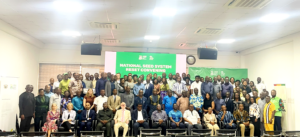
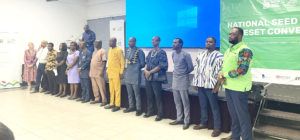
By the close of the second day, stakeholders had reached consensus on four core outcomes: a new seed delivery architecture aligned with Feed Ghana and the 24‑Hour Economy, clarified institutional roles across government, research, the private sector and civil society, the design of a “Seed Delivery Spine” for priority crops linking breeding, early‑generation seed, commercial multiplication and markets, and the establishment of a multi‑stakeholder Seed Systems Task Team. The Task Team will be mandated to translate these decisions into a detailed implementation roadmap within 60 days, including commitments on policy reform, financing, anchor demand and regulatory enforcement.
For the Ghana JET programme, supporting this process is part of a broader partnership with Government to build the enabling conditions for diversified, job‑creating growth – where seed systems are recognised and financed as national infrastructure, not just another input.