Ghana’s textile and garment sector has strong growth potential through opportunities such as the UK-Ghana Trade Partnership Agreement and the African Growth and Opportunity Act (AGOA). Yet the sector continues to grapple with a heavy reliance on imports, with Ghana spending more than US$200 million annually on garment imports in recent years. This presents a significant opportunity for local manufacturers to meet growing domestic demand while expanding into export markets.
A recent study by the Development Bank Ghana (DBG) found that while access to finance remains a major challenge for businesses in the sector, limited understanding of the T&G value chain among financial institutions is also constraining investment.
To address this gap, DBG, with support from the UK Government’s flagship Ghana Jobs and Economic Transformation (JET) programme and the GIZ-implemented Invest for Jobs initiative, organised a Technical Assistance Workshop on Textile and Garment Financing for its partner financial institutions.
The workshop brought together representatives from financial institutions, the Ghana Garments and Apparel Manufacturers Association, the International Labour Organization (ILO), Akosombo Textiles Limited (ATL), the Ministry of Trade, Agribusiness and Industry (MoTAI), and other stakeholders within the investment ecosystem. Discussions focused on sector opportunities, financingneeds, risk mitigation approaches, and practical financing structures to support increased lending to textile and garment enterprises.
One of the standout moments of the event was the exhibition of high-quality Made-in-Ghana garments, including uniforms, underwear, t-shirts, and other apparel. Many participants were surprised to learn that the products had been manufactured locally, highlighting the sector’s untapped potential to compete with imports and access international markets.
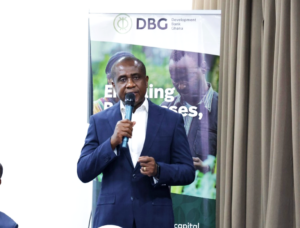
Speaking during the workshop, Michael Mensah-Baah, Deputy CEO – Investment at DBG, underscored the need for financing solutions tailored to the realities of the industry:
“It is clear that traditional financing available will not be adequate for T&G industry companies. And that is where we have to come in to design something more tailor-made for the industry.”
The workshop featured presentations on understanding the garments value chain and financing needs, key risks in T&G financing and practical risk mitigation, financing structures for textile and garment enterprises, and international lessons from successful textile-producing countries. Together, these sessions provided participants with practical insights into opportunities across the value chain and approaches for supporting industry growth.

The activity reflects the UK Government’s commitment to leveraging technical expertise and strategic partnerships to address investment barriers, strengthen value chains, and unlock private investment for industrial growth and job creation.
Importantly, the discussions have already generated commitments from participating institutions to advance financing opportunities into pipeline and transaction development, bringing Ghana’s textile and garment sector one step closer to realizing its full potential.