
GIP backs Springs and Bolts Company to expand automotive manufacturing

Growth Investment Partners (GIP) Ghana Ltd, an investment platform established by British International Investment (BII), has announced a strategic investment in Springs and Bolts Company Limited (SBCL), a Kumasi-based manufacturer of automotive aftermarket components. The investment will finance the acquisition of a fully automated leaf spring production line, enabling SBCL to expand production capacity from 4 to 12 metric tonnes per day while also enhancing growth efficiency. The expansion is expected to boost local capacity, reduce reliance on imports, and position Ghana as a competitive supplier of automotive components within the West African region. With regional demand for springs, bolts, and related products estimated at US$600 million annually, most of which is currently served by imports from Asia and South Africa, the investment will help strengthen Ghana’s industrial supply chains.

Jacob Kholi, Chief Executive and Investment Officer of GIP Ghana said: “There is a clear market gap for locally manufactured components that meet international standards. By backing SBCL’s expansion, we are not only scaling a competitive business but also contributing to Ghana’s broader industrialisation agenda.”

Founded in 2013, as a Free Zone Company, SBCL exports more than 70 percent of its production to ECOWAS countries such as Nigeria, Ivory Coast, Mali, and Burkina Faso, while maintaining a strong domestic presence.

Derrick Asamoah Boahen, Chief Executive Officer of SBCL, welcomed the partnership “Our goal is to position SBCL as the preferred source of high-quality automotive components in West Africa. We are proud to partner with GIP in this next phase of our growth. With increased capacity and automation, we can better serve the automotive, logistics, mining, and agriculture sectors while providing more affordable and quality alternatives to imported products”.

SBCL’s growth has been supported through partnerships with Supreme Springs of South Africa for technical expertise, GIZ for market access to logistics and mining companies, and the UK Foreign, Commonwealth and Development Office’s (FCDO) Jobs and Economic Transformation (JET) Programme for market research and expanding capacities into novel production of fasteners.
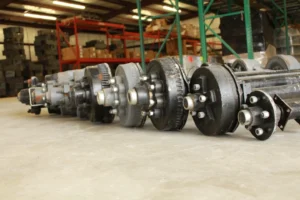
The company currently employs 28 people and is poised to expand its workforce significantly. With duty-free access under the ECOWAS Trade Liberalisation Scheme, SBCL is well-positioned to improve competitiveness across the sub-region while exploring vertical integration opportunities such as securing raw material supply chains and expanding downstream services.

“Reducing dependence on imports is not just about production capacity, it’s about building an ecosystem that supports critical supply chains across mining, agriculture, and logistics,” Boahen added.

Kwabena Asante Poku, Country Director for Ghana, British International Investment, said: “Through Growth Investment Partners Ghana, British International Investment is backing SMEs that can transform Ghana’s industrial base. Supporting SBCL’s expansion will not only reduce reliance on imports but also strengthen critical supply chains across mining, agriculture, and logistics.”

The GIP-SBCL partnership aligns with Ghana’s industrial policy goals by expanding manufacturing capacity, creating jobs, and strengthening regional supply chains.

From Vision to Action: Plans for Ghana’s First Bio-Injectables Facility Take Shape

Ghana is taking a bold step toward pharmaceutical self-reliance. At a recent learning event, stakeholders in the pharmaceutical ecosystem gathered to explore the results of a feasibility study on building Ghana’s first bio-injectables manufacturing facility, a landmark project aimed at reducing dependence on imported medicines, strengthening local health systems, and creating high-quality jobs for Ghanaians.

Organised by the UK-funded Ghana Jobs and Economic Transformation (JET) programme and Quintex Pharma, the webinar brought together policymakers, industry leaders, and experts to discuss how Ghana can align policy, industry, and national interests to enrich discussions that could transform the country into a hub for advanced pharmaceutical production in West Africa. The webinar also provided an opportunity for participants to learn from best practices emerging from the initiative.

The proposed $60 million state-of-the-art plant is a joint venture between Ghana’s Quintex Pharma and South Korea’s GL Rapha. Currently, Ghana imports over 70% of its medicines, costing the country more than $300 million each year. The COVID-19 pandemic exposed the risks of relying on imports, especially during global supply chain disruptions. “Our goal is to build a facility that reduces Ghana’s dependence on imported medicines and strengthens our national health security,” said Dr. Kwesi Amissah-Arthur, CEO of Quintex Pharma.

The Ghana JET programme played a catalytic role in fostering a strategic partnership between Quintex Pharma and GL Rapha, paving the way for Ghana’s first bio-injectables manufacturing facility. Through UK-backed support, JET facilitated a feasibility study that assessed the plant’s financial viability, regulatory landscape, market demand, and environmental and social impacts. This partnership model reflects a broader commitment to building sustainable pharmaceutical capacity in Ghana. With the Ghana Food and Drugs Authority (FDA) now among the first two Sub Saharan African regulators to achieve WHO Maturity Level 3, the country is well-positioned to access larger regional markets and attract further investment.

Panelists at the event discussed challenges such as high business costs, access to financing, and the need for government incentives. They also highlighted the importance of research, skills development, and maintaining high manufacturing standards to ensure Ghana’s competitiveness.

Panelists stressed the need for competitive pricing, government support, and financing solutions to overcome high production costs and borrowing rates. They also underscored the importance of technology transfer, skills development, and maintaining strict Good Manufacturing Practices (GMP) to make Ghana a trusted pharmaceutical hub. 

“While the cost of doing business in Ghana presents challenges, it also highlights the urgency and opportunity to strengthen local competitiveness. By addressing key barriers, unlocking government incentives, and close financing gaps created by high interest rates, we can empower companies to thrive and reduce reliance on imports” noted Mr. Theophilus Arthur-Mensah – Senior Manager for Policy and Research, Association of Ghana Industries

The pharmaceutical sector is a government priority, especially post-COVID-19 which revealed supply chain vulnerabilities. “Guided by a Ghana Pharmaceutical Manufacturing Development Policy, we are committed to creating an enabling environment, ensuring market access, and driving incentives for R&D and technology transfer,” explained Mr. Kwasi Ofori-Antwi – Head of Strategic Anchor Industries, Ministry of Trade, Agribusiness, and Industry.

The Q&A session added depth to the webinar, with participants keen to understand how the initiative would support knowledge sharing, skills development, and technology transfer to boost local employment. A key takeaway was the emphasis on maintaining high manufacturing standards. 

“Good Manufacturing Practices (GMP) should be a core requirement for all pharmaceutical manufacturers, and a clear criterion for government procurement,” urged Reverend Jonathan Martey, Pharmaceutical Quality Assurance and Regulatory Affairs Consultant. “When companies commit to quality, they should be rewarded. If Ghana aims to lead in the regional pharmaceutical sector, we must consistently uphold a culture of quality. The long-term benefits are enormous.”

For Quintex Pharma, the long-term vision includes selling in Ghana, expanding to other West African countries, and eventually becoming export-focused. As CEO Dr. Kwesi Amissah-Arthur put it, “early and strong partnerships, competitive pricing, and maintaining world-class standards will make this work, because he who dares, wins.”

This initiative is more than a manufacturing project—it’s a bold move toward health security, economic growth, and regional leadership in pharmaceutical production.

Building momentum and coordination to spur Ghana’s industrial and economic transformation ambitions

The UK–Ghana Growth Partnership remains a top priority across government and industry. Ghana JET recently convened key public and private sector stakeholders to align on a strategic pathway and immediate actionable steps to unlock investment and jobs in priority manufacturing sectors.

There is clear cross-government commitment to:
> Drive broad-based industrialisation across priority manufacturing sectors to enhance self-reliance and strengthen supply chains amidst global developments, notably new 15% tariffs from the US.
> Build a robust policy and incentive framework to ensure competitiveness and sustainability to attract strategic investments and deepen local value chains.

What’s next?
To maintain momentum and champion further strategic planning and cross-government alignment, the UK’s Ghana JET is helping to establish a technical subcommittee with MoTAI, GIPC, and the 24-Hour Economy Secretariat.
The focus of these sessions will be to identify and unblock constraints to strengthen the business environment, unlock manufacturing investments, and create jobs in the priority manufacturing sectors.

UK-Ghana JET enters strategic partnership with automotive industry players to advance affordable mobility

The UK Government-funded Jobs and Economic Transformation in Ghana programme (Ghana JET) has signed a memorandum of understanding (MOU) with the African Association of Automotive Manufacturers (AAAM) and the Automobile Assemblers Association of Ghana (AAAG) to accelerate the rollout of an integrated vehicle asset-based finance framework in Ghana. Signed during the first day of the IATF Automotive Forum in Algiers, this strategic collaboration will drive progress towards unlocking the potential of Ghana’s automotive industry, attracting more investment and increasing employment. 

Africa is seen as the last major growth market for the global automotive industry, with the potential to produce between three to five million new vehicles annually by 2035. To achieve this ambition, car makers are expanding their manufacturing presence across the continent. In 2020, Ghana launched its Automotive Development Policy under the leadership of the Ministry of Trade, Agribusiness and Industry. Since then, thirteen global car makers (including Volkswagen, Toyota, Nissan, and KIA) in addition to a local assembler, have invested and established facilities to assemble cars locally. Despite this progress, demand for new vehicles remains low, with fewer than 30% of purchases financed through credit, largely due to high interest rates. This is a largely common trend in Sub-Saharan Africa (Fitch Solutions, 2019).  

Signing the MOU on behalf of the Ghana JET programme, Team Lead – Eugene Sangmortey, expressed anticipation to be partnering with key industry stakeholders to consolidate expertise, capacity and resources to effectively execute this critical phase of the vehicle finance initiative. “I am confident this partnership will be catalytic in driving demand for ‘made in Ghana’ vehicles,” noted, Mr. Sangmortey. 

“This collaboration will accelerate the delivery of affordable finance products tailored for Ghana’s automotive sector, creating jobs, attracting investment, and strengthening the country’s role in Africa’s automotive value chain,” added Jeffrey Oppong Peprah, President of AAAG. Kassem Odaymat, Vice President of AAAG, signed on behalf of AAAG.  

“As the continental automotive association, AAAM fully supports this move as a lever to grow and develop Ghana’s automotive industry, in line with the continental automotive strategy”, said Martina , President of AAAM and CEO of Volkswagen Africa.  

The initiative will model and pilot a Minimum Viable Product (MVP) between key actors including financial institutions, vehicle assemblers, and dealers. The MVP will serve as a proof of concept to pave the way for scaling up structured vehicle financing nationwide and potentially serve as a model for other African markets.