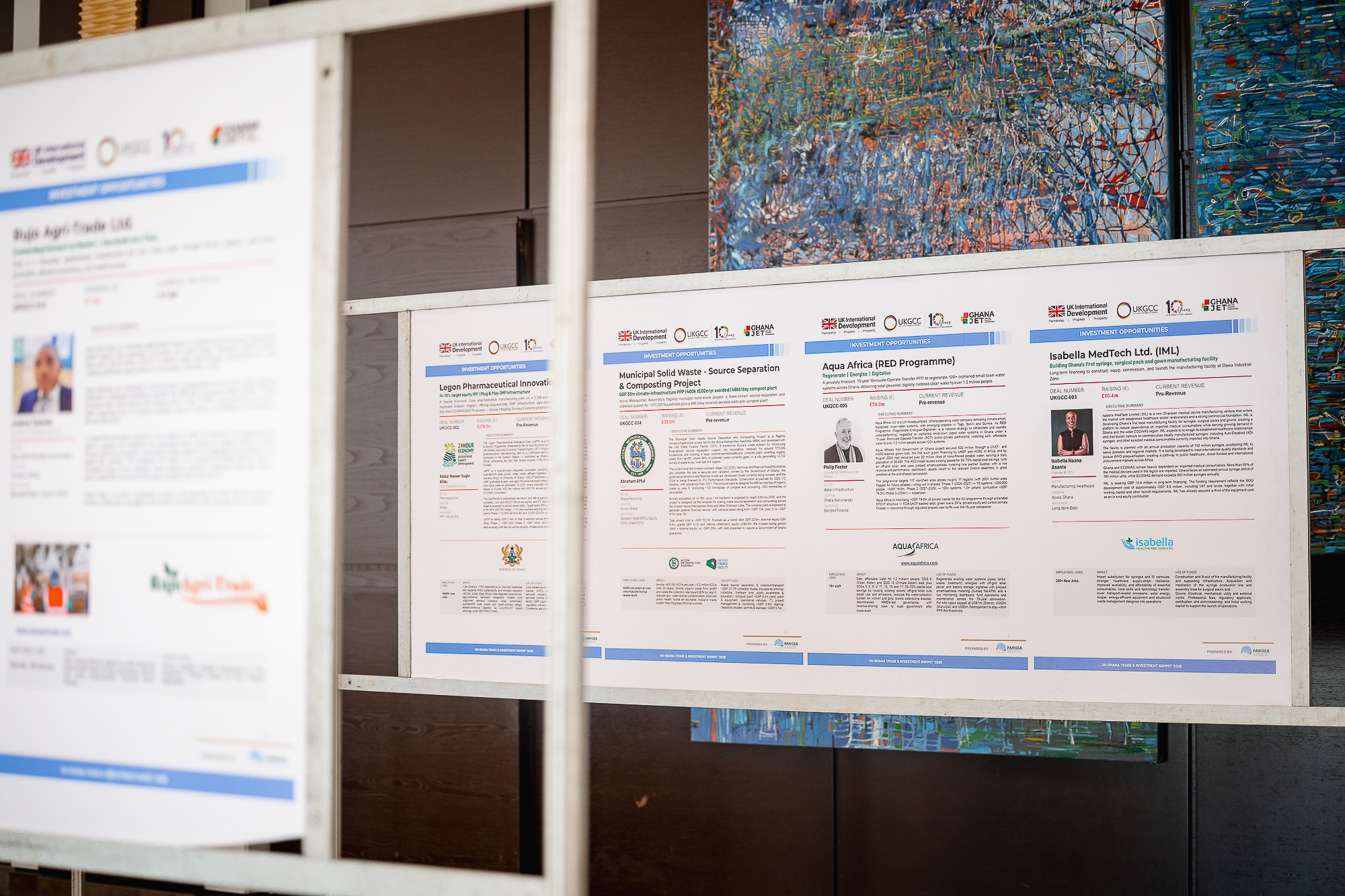
The Government of Ghana has launched the Pharmaceutical Manufacturing Framework Policy, marking a significant milestone in the country’s efforts to accelerate industrial transformation, strengthen domestic pharmaceutical production and attract increased investment into the sector.
The policy, which received Cabinet approval in June 2026, provides a comprehensive framework to guide the growth and competitiveness of Ghana’s pharmaceutical manufacturing industry. It forms part of a broader package of industrial policies, including the Textile and Garment Manufacturing Policy and the Ghana Automotive Component Manufacturing Policy.
The Pharmaceutical Manufacturing Framework Policy was developed with technical support from the UK Government through the UK-Ghana Jobs and Economic Transformation (JET) Programme, as well as the German Development Cooperation through the PharmaVax Project, the European Union and other partners.
Launching the policy, Hon. Elizabeth Ofosu-Adjare, Minister for Trade, Agribusiness and Industry, said the policy marks the beginning of a new chapter for Ghana’s pharmaceutical industry and reflects the Government’s commitment to reducing dependence on imports and building a globally competitive manufacturing sector.
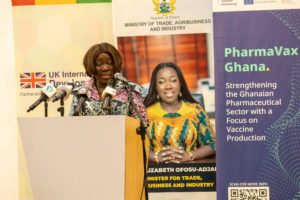
“Medicines are not ordinary goods. A country that cannot produce its own essential medicines leaves its health, economy and sovereignty vulnerable to decisions made elsewhere,” the Minister said. “This policy seeks to address critical constraints facing the industry, including high production costs, expensive financing, limited product diversification, and gaps in technology and skilled personnel.”
Ghana’s pharmaceutical sector is among the most developed in West Africa, with 38 licensed pharmaceutical manufacturing facilities employing more than 10,000 people directly. However, imported medicines continue to account for a significant share of domestic demand, presenting opportunities for increased local production, investment and export growth.
A key theme emerging from the launch was that policy development alone will not deliver Ghana’s ambitions. Speakers emphasised that success will depend on sustained implementation, investment and collaboration between government, industry, regulators, development partners and investors.
Speaking at the launch, Terri Sarch, UK Development Director at the British High Commission, underscored the importance of partnership in translating the policy into tangible results.
“Today’s launch is not only a significant achievement for Ghana, but also a testament to what can be achieved through sustained collaboration between government, industry and development partners,” she said. “The UK is proud to be one of the first development partners to support the development of this policy through the JET Programme.”
She noted that UK support has helped catalyse private investment across Ghana’s vaccine ecosystem, including the establishment of Ghana’s first vaccine-capable manufacturing facility, and highlighted broader JET Programme results of more than £130 million in investment mobilised and over 10,000 formal jobs created across Ghana.
“Policy alone cannot transform a sector,” Ms Sarch added. “Success will depend on continued collaboration, a competitive business environment, stronger skills, increased investment and regulation that supports innovation while safeguarding quality and safety.”

Addressing participants, Dr George Sabblah, Deputy Chief Executive Officer, Technical Operations at the Food and Drugs Authority (FDA), outlined ongoing regulatory and industry capacity-building measures designed to support implementation of the policy.
These include a roadmap to support local manufacturers to achieve current Good Manufacturing Practice (cGMP) standards by the end of 2027, initiatives to develop local technical expertise for the industry, and implementation of the restricted import list under Executive Instrument 496 to encourage local production of more than 200 pharmaceutical products.
“The success of this policy will not be determined by today’s launch, but by what we achieve collectively after today,” Dr Sabblah said.
Industry leaders also welcomed the policy as an opportunity to deepen local production and strengthen Ghana’s position as a pharmaceutical hub for West Africa and the continent.
Dr Lucia Addae, Executive Secretary of the Pharmaceutical Manufacturers Association of Ghana (PMAG), described the policy as providing clear direction for the industry and a pathway towards greater self-sufficiency and export competitiveness.
She called for continued focus on financing, market access, skills development, quality standards and local value-chain development, stressing that implementation would be critical to unlocking the policy’s full potential.
The launch also highlighted the importance of creating an enabling business environment. Speaking at the event, the German Ambassador to Ghana noted that governments cannot build successful pharmaceutical industries through policy alone, but can create the conditions necessary for private investment, innovation and manufacturing growth through effective regulation, reliable institutions and access to finance.
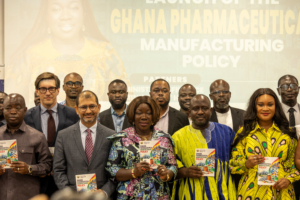
The launch reinforces ongoing collaboration between Ghana and the United Kingdom under the UK-Ghana Growth Partnership, which seeks to promote trade, investment and sustainable economic development. Pharmaceuticals has been identified as one of the sectors with strong potential to deepen bilateral cooperation while improving health security, creating jobs and attracting investment.
The UK continues to work with the Government of Ghana and industry stakeholders to develop new opportunities across the health and life sciences sector, including support for the proposed Legon Pharmaceutical Innovation Park, envisioned as a world-class hub for pharmaceutical manufacturing, research and innovation.