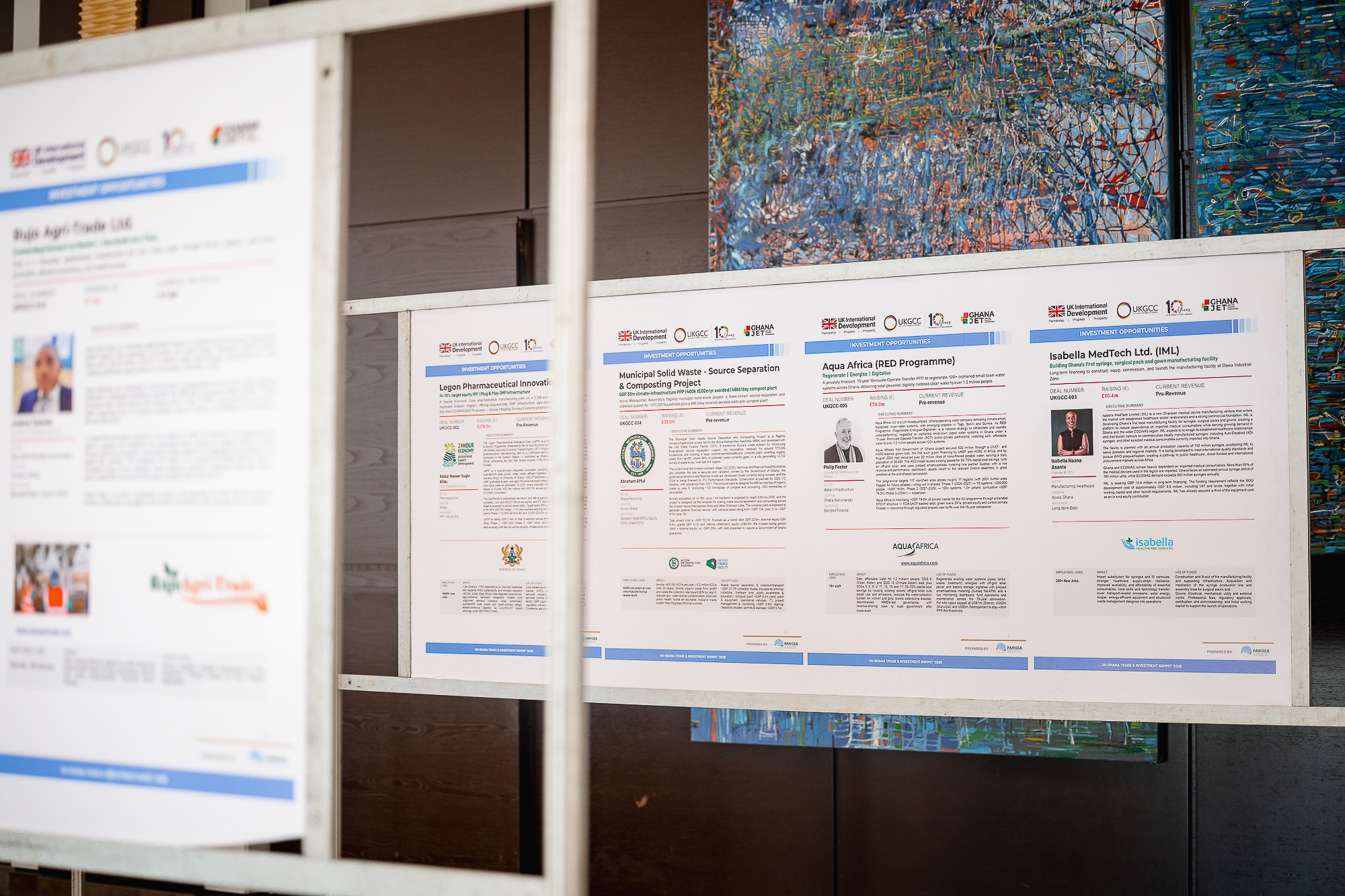
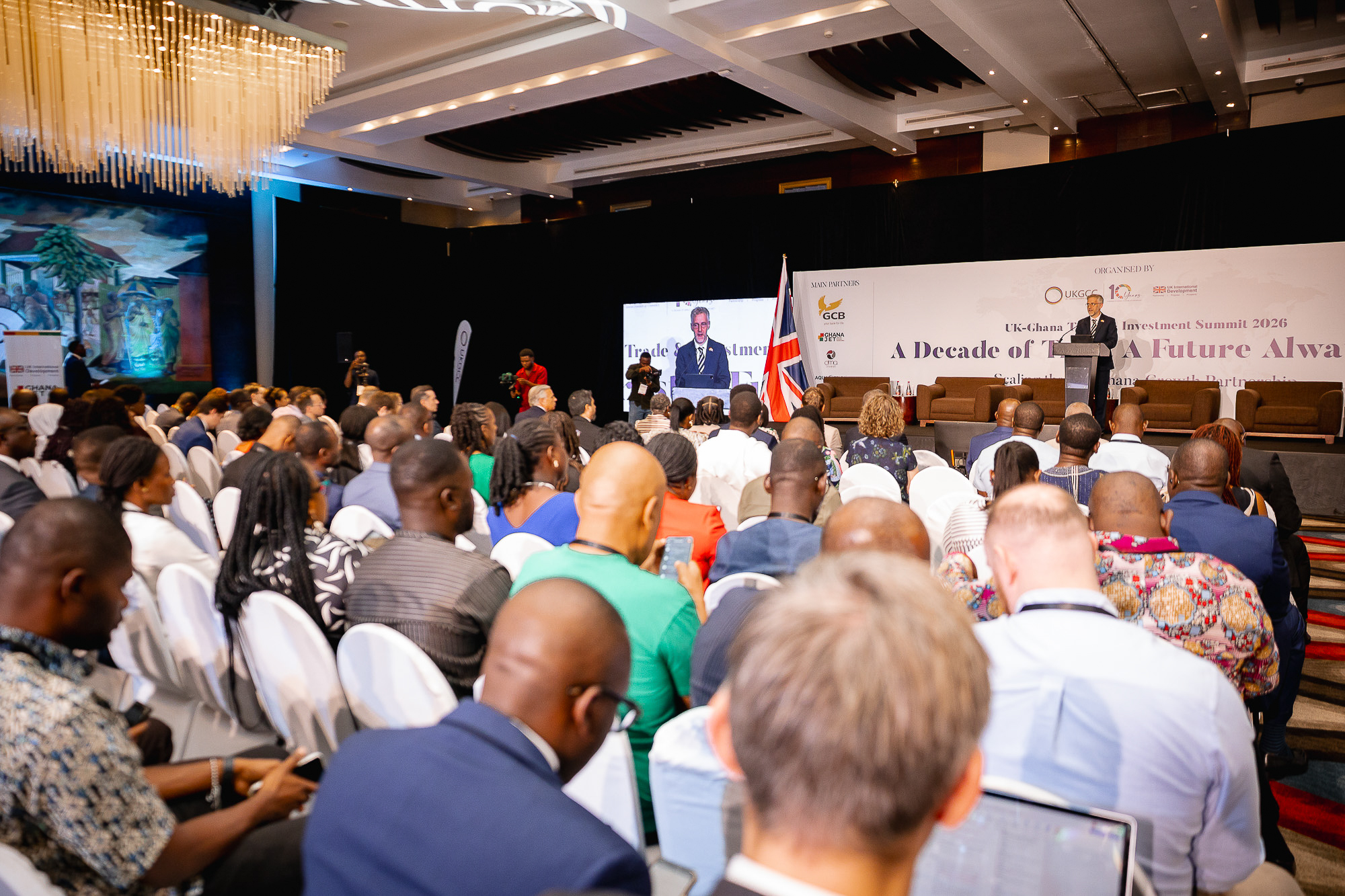
Investors, business leaders, financiers and policymakers gathered at the Ghana Country Investment Summit during AFSIC 2026 to explore how Ghana is translating economic stability into investable opportunities and commercial partnerships.
The summit highlighted growing UK-Ghana economic ties and showcased opportunities across agriculture, manufacturing, renewable energy, infrastructure, digital services and pharmaceuticals.
Opening the session, Ghana’s High Commissioner to the United Kingdom and Ireland, H.E. Mrs Sabah Zita Benson, emphasised Ghana’s strong investment fundamentals and longstanding relationship with the UK.
“Trade between our two countries is worth about £1.6 billion a year, while UK investors have invested approximately £1.8 billion across more than 670 projects in Ghana, creating over 44,000 jobs,” she said.
She noted that Ghana’s democratic credentials, commitment to policy stability and role as host of the African Continental Free Trade Area (AfCFTA) Secretariat continue to strengthen the country’s appeal as a gateway to West Africa’s 1.4 billion-person market.
A recurring theme throughout the summit was the need to move beyond broad investment narratives and towards bankable, well-prepared projects.
Mrs Ophelia Attobrah, Chief Banking Officer at Ghana International Bank, underscored the importance of project preparation in attracting long-term capital.
“The best ideas and funding are on their way. Our shared responsibility is to ensure that great ideas do not remain unrealised. Success requires discipline, preparation, governance and execution.”
Presenting Ghana’s investment outlook, Ms Eugenia Okyere, Head of Research and International Cooperation at the Ghana Investment Promotion Authority (GIPA), outlined opportunities in commercial agriculture, agribusiness, pharmaceutical manufacturing, electric vehicle assembly, renewable energy, fintech and digital services.
She also highlighted reforms under Ghana’s new investment legislation, including the removal of minimum capital requirements for many foreign investors, strengthened investor grievance mechanisms and the development of an Investment Opportunities Project pipeline that has already identified more than 600 investable projects nationwide.
During the investor panel discussion, speakers emphasised that Ghana’s investment proposition is evolving from sector promotion to project development.
Representatives from the 24H+ Economy and Accelerated Export Development Programme, Ghana Infrastructure Investment Fund (GIIF), GFA Consulting and the Ghana Investment Support Programme (GhISP) pointed to opportunities in agribusiness, renewable energy, logistics, infrastructure, data centres and pharmaceuticals. Panelists also stressed that investors increasingly look for evidence of business readiness, strong governance and clear growth trajectories rather than potential alone.
The discussion concluded that while Ghana’s macroeconomic and political stability remain key advantages, the country’s growing pipeline of structured, investment-ready projects is what will ultimately help unlock new capital flows and accelerate economic transformation.
Closing the summit, Nana Frimpomaa Arhin, Team Lead, Growth Team at the British High Commission Accra, encouraged investors to view challenges through the lens of opportunity, noting that many of the constraints businesses seek to solve represent some of the most compelling investment prospects.
“Challenges are often opportunities waiting to be invested in. The conversations today have demonstrated that Ghana is not only identifying opportunities but developing the partnerships and projects needed to turn them into commercially viable investments.”
The Ghana Country Investment Summit formed part of the AFSIC 2026 and the wider UK Investment Roadshow, a UK Government-supported initiative delivered by the UK-Ghana Chamber of Commerce and the UK-Ghana Jobs and Economic Transformation (JET) Programme, in partnership with Ghana International Bank and other stakeholders, to strengthen trade, investment and commercial partnerships between the UK and Ghana.
Beyond the summit, Day 2 of AFSIC featured deal room discussions, investor networking sessions, a Quickfire Pitch platform connecting businesses with impact and infrastructure investors, engagement with leading DFIs scouting investment opportunities across Africa, and a Power Panel exploring the critical question: Who will finance and own Africa’s energy transition?